What Counts as Plumbing Work Requiring a Hawaii Plumber License
If you own a home or manage a building in Hawaii, the line between a simple fix and licensed plumbing work matters more than many people realize. It affects who you hire, how you evaluate bids, and what kind of risk you take on when a pipe leaks or a water heater fails. The short answer is straightforward: in Hawaii, a plumber’s license is required for any person who performs plumbing work. The state also directs consumers to verify license status through the DCCA licensing system.
That broad rule settles the big question, but in real life people want to know where everyday jobs fit. Does a clogged drain count? What about a leaking water heater? Is solar water heater repair plumbing work, or is it something else? If a company advertises sewer line repair, leak detection, or commercial plumbing in Hilo, should you expect a licensed plumber to handle it?
In practice, if the task is being offered and performed as plumbing work in Hawaii, the safest and most defensible assumption is that it belongs in the hands of a licensed plumber. That is especially true for the services plumbing companies routinely advertise, including drain cleaning, sewer line repair, leak detection, water heater repair, solar water heater repair, and larger commercial plumbing jobs.
The rule in Hawaii is broad for a reason
Hawaii does not frame this as a narrow licensing issue tied only to major construction. The state’s position is wider than that. A plumber’s license is required for any person who performs plumbing work. That wording matters because it does not carve the field into “important work” and “minor work” for consumers to sort out on their own.
From a risk standpoint, that makes sense. Plumbing systems affect sanitation, potable water, drainage, waste removal, and in many cases equipment that runs under pressure or heat. Even a repair that looks simple on the surface can carry consequences if it is done poorly. A small leak behind a wall can become structural damage. A misdiagnosed drain issue can point to a deeper sewer line problem. A water heater repair can involve both plumbing components and safety concerns.
I have seen property owners focus on whether a task “seems small,” when the better question is whether the task is plumbing. In Hawaii, that distinction matters far more.
Why people get confused about what “counts”
Part of the confusion comes from the way plumbing work shows up in day-to-day life. Not every call feels like a major project. Sometimes it starts with a slow sink, a dripping valve, a lukewarm shower, or water showing up where it should not. Because the symptom seems minor, people assume the fix sits outside normal licensing rules.
That is rarely a sound approach.
Another source of confusion is search behavior. People type “plumber near me” or “emergency plumber” into a search bar when there is an urgent problem, and urgency tends to compress judgment. In that moment, the customer is not thinking about licensing categories. They are thinking about stopping damage, restoring hot water, or reopening a backed-up restroom. Yet that is exactly when license verification matters most, because urgent jobs often carry the highest stakes.
In places like Hilo, where plumbing companies commonly advertise everything from residential repairs to drain cleaning and sewer line work, consumers can reasonably treat those advertised services as plumbing services that should be performed by properly licensed professionals.
The practical categories most people ask about
It helps to look at the kinds of work Hawaii plumbing businesses routinely offer. Two Hilo-area plumbing companies publicly advertise services such as residential plumbing repair, emergency plumbing, drain cleaning, sewer line repair or inspection, leak detection, water heater installation or repair, solar water heater service, and commercial plumbing. Those service categories give a practical picture of what the market itself treats as plumbing work.
Water heater repair and replacement
Water heater issues are among the most common reasons people call a plumber. The problem might be no hot water, inconsistent temperature, a leak around the tank, or visible corrosion. Even when the equipment is only one part of the job, the work is still tied directly to the plumbing system. In Hawaii, where a plumber license is required for any person who performs plumbing work, that puts water heater repair squarely inside licensed territory.
The same logic applies to installation or replacement. A homeowner may think of a water heater as an appliance, but once the job involves piping, fittings, shutoffs, or connecting the unit into the building’s water system, the plumbing component is not incidental. It is central.
This is one of those areas where people can talk themselves into shortcuts because the equipment is familiar. That is a mistake. If you are hiring someone for water heater repair, ask whether the person performing the work is licensed and verify the license through the state’s public system.
Solar water heater repair
Hawaii has long had strong practical interest in solar water heating, so this issue comes up often. Some owners assume solar systems sit in a separate category and therefore do not involve ordinary plumbing rules. That assumption is risky.
At the very least, when a company advertises solar water heater repair as part of its plumbing services, it is treating that work as plumbing. In the Hawaii market, Hilo plumbing companies do advertise solar water heater installation and repair. That alone should tell consumers not to treat solar water heater service as a casual handyman task.
The right question is not whether the system sits on the roof or uses solar energy. The right question is whether the work being done is part of plumbing service. If it is, the person performing it should be properly licensed.
Drain cleaning
Drain cleaning is a classic gray-area job in the minds of property owners. A clogged sink or backed-up shower can feel like basic maintenance. But when a business advertises drain cleaning as a plumbing service, and when the state requires a license for any person performing plumbing work, consumers should not assume this is outside the licensing requirement.
That matters because drain problems are often not isolated. A kitchen line clog may reveal a broader branch issue. A recurring backup can point toward the main line. Work that starts as drain cleaning can quickly intersect with diagnosis, access, removal of obstructions, or identification of defects deeper in the system.

I have found that recurring drain calls are where unlicensed work often costs the most in the long run. A quick temporary opening is not the same thing as competent plumbing service. If the drain issue comes back, the customer ends up paying twice, sometimes more.
Sewer line repair
Sewer line repair is one of the clearest examples of work that should never be treated casually. It directly affects sanitation, waste removal, and the function of the entire drainage system. In Hilo, plumbing businesses openly advertise sewer line repairs and installations, as well as sewer line inspection. That market behavior aligns with common sense: this is plumbing work, and in Hawaii plumbing work requires a license.
Homeowners tend to underestimate sewer line jobs because the visible symptom may be simple, such as a slow toilet or frequent backup. But the underlying work is rarely simple. Even when the initial service call is diagnostic, it belongs in a licensed plumbing context.
Leak detection and leak repair
Leak detection sounds modern, technical, and separate from old-fashioned plumbing, but in practice it is often part of the same service chain. A company identifies where water is escaping, then repairs the affected plumbing. Hilo-area businesses advertise water leak detection and repair together, which is a useful signal for consumers.
From a practical standpoint, leak detection is not merely hunting for moisture. It is part of identifying faults in a plumbing system. The repair that follows is plainly plumbing work. When you hire for leak detection, especially if repair may follow immediately, it makes sense to verify that the company is operating with licensed plumbing professionals.
Commercial plumbing
Commercial plumbing deserves special attention because building owners sometimes assume that if a company has been working on commercial sites for years, licensing can be taken for granted. It should never be assumed. Verify it.
Commercial work often involves larger systems, tenant coordination, downtime concerns, and stricter operational pressure. Whether the job is a repair, replacement, or emergency response, the underlying licensing expectation does not get looser just because the building is bigger. If anything, the risk profile is higher.

What an “emergency plumber” should still have
Emergency service does not change the licensing rule. If anything, emergencies are when consumers should be most disciplined. Burst lines, failed water heaters, backups, and active leaks create urgency, and urgency makes people more likely to skip due diligence.
A true emergency plumber in Hawaii may be the first call you make when water is spreading across a floor at night. Even then, the fact that the response is fast does not excuse the licensing requirement. The state provides a public license-search system for a reason. Consumers can check active status, original licensure dates, expiration dates, and disciplinary history.
That public verification tool is one of the most practical protections available to owners, tenants, and managers. It gives you a way to move beyond marketing language and verify whether the professional showing up at your door is properly credentialed.
The role of the Board of Electricians and Plumbers
Licensing is not a vague administrative concept in Hawaii. The Board of Electricians and Plumbers handles plumber licensing, renewals, and continuing competency requirements. That structure matters because it tells you two things.
First, plumber licensing is actively regulated, not just nominally required.
Second, the state ties license maintenance to continuing competency. For the renewal period running from July 1, 2024 to June 30, 2027, licensed plumbers on active status must complete continuing competency based on the 2021 Uniform Plumbing Code.
That requirement is important for consumers because it points to an expectation of current knowledge, not just old experience. Plumbing is a trade where habits form quickly, but codes and accepted practices still matter. A license on active status, paired with the state’s continuing competency requirement, is one of the few concrete signals that the person doing the work is supposed to stay current.
The terms “journey worker” and “master plumber” are not decoration
Hawaii’s licensing materials and state employment classifications reference valid Hawaii journey worker or master plumber licenses. For consumers, those titles are not just resume language. They indicate recognized licensure categories within the trade.
You do not need to become an expert in licensing classifications to hire well. But you should understand that if someone presents themselves as a plumber, the title should correspond to a real, verifiable Hawaii license status, not a generic claim of experience.
This is another reason online searches can mislead. A polished website can make every provider look established. A “Hilo plumber” with strong advertising and a quick phone answer may or may not be properly licensed. The state verification system cuts through that quickly.
A practical way to think about borderline situations
People often want a bright-line list of jobs that need a license and jobs that do not. Based on the verified Hawaii information, the safer framing is this: if the person is performing plumbing work, a Hawaii plumber license is required. The challenge is that “plumbing work” in everyday life shows up under many labels.
Here is the practical test I would use before hiring:
- Does the job involve diagnosing, repairing, installing, replacing, or servicing part of a plumbing system or a plumbing-related fixture or component?
- Is the service being marketed by plumbing companies as plumbing service, such as drain cleaning, leak detection, water heater repair, or sewer line repair?
- Would a mistake create a risk involving water damage, drainage failure, sanitation, or interruption of building service?
- Is the provider presenting themselves as a plumber, emergency plumber, commercial plumber, or similar trade professional?
If the answer to those questions points toward plumbing, treat it as licensed plumbing work and verify the license.
That approach is conservative, but it is also realistic. Consumers usually get into trouble when they try to draw technical distinctions that the state has not invited them to draw.
What license verification tells you, and what it does not
The DCCA public license-search system gives you meaningful information. You can check active status, original licensure dates, expiration dates, and disciplinary history. That is enough to answer several important questions before work begins.
An active license tells you the person or business is not relying on vague trade claims alone. Original licensure date can give some sense of how long the credential has existed, although years alone never guarantee quality. Expiration date matters because an expired license is not the same as an active one. Disciplinary history can reveal whether there have been formal issues serious enough to be recorded.
What the system does not do is choose the best plumber for your job. License verification is the floor, not the ceiling. You still need to judge responsiveness, communication, scope clarity, and whether the provider seems suited to your particular problem, whether that is water heater repair, drain cleaning, sewer line repair, or a commercial plumbing issue.
How this plays out for homeowners and property managers in Hilo
Hilo is a useful example because local plumbing companies there publicly advertise a broad spread of services. If you are hiring in that market, the categories alone should remind you how much everyday building trouble falls under plumbing work. The call may begin with a clogged drain, a hidden leak, a failed water heater, or a solar hot water problem. It may expand into more serious corrective work once the plumber arrives.
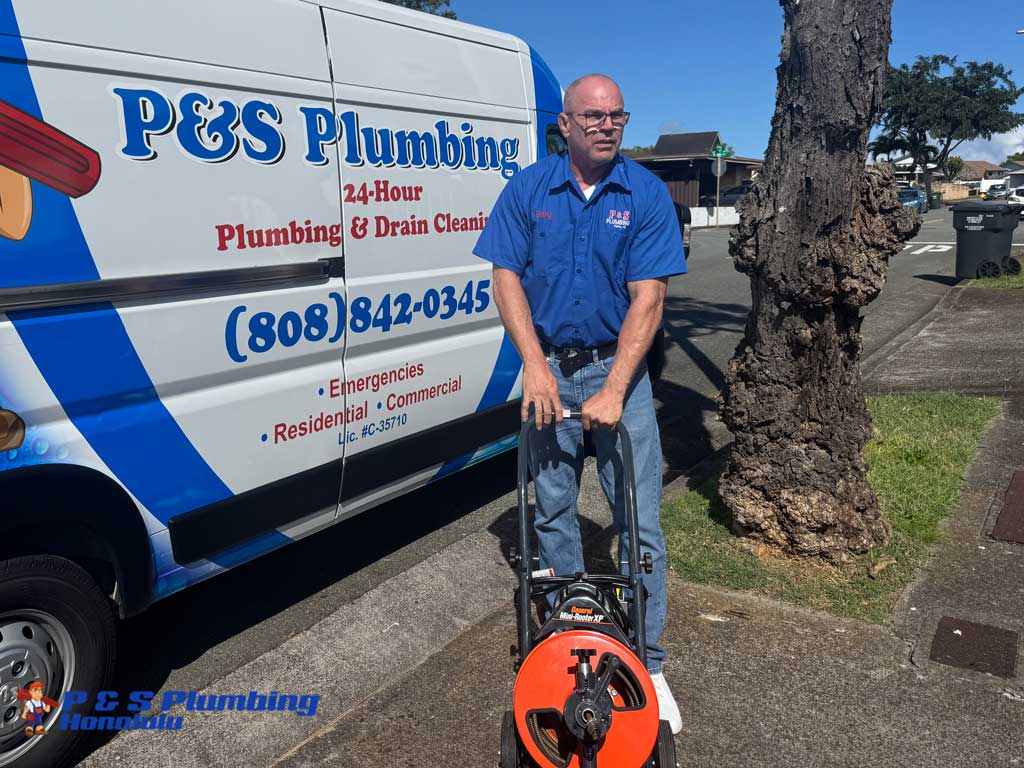
That is why “plumber near me” should never be your only filter. Proximity helps. Speed helps. In an emergency, both matter a lot. But a nearby provider still needs to be a properly licensed plumber if they are performing plumbing work in Hawaii.
The same applies to business owners looking for a commercial plumber. A fast response to a restaurant sink backup or a tenant complaint is valuable, but the licensing issue does not disappear because the property cannot afford downtime.
The simplest consumer checklist
Most owners do not need a deep legal analysis. They need a clear way to avoid preventable mistakes. This is the short version I would hand to any customer in https://paxtonwbpl989.northvaledigest.com/posts/sewer-line-repair-and-installation-offered-in-hilo Hawaii:
- Assume plumbing work requires a Hawaii plumber license, because the state says a license is required for any person who performs plumbing work.
- Treat commonly advertised services such as water heater repair, solar water heater repair, drain cleaning, sewer line repair, leak detection, and commercial plumbing as licensed plumbing territory.
- Verify license status through the DCCA public licensing system before authorizing work, especially for an emergency plumber or a first-time hire.
- Check whether the license is active, and review expiration and disciplinary information.
- If the job description shifts after diagnosis, keep applying the same rule: if it is plumbing work, it should be done by a licensed plumber.
That short checklist will prevent most of the bad decisions people make under pressure.
The bottom line for hiring decisions
When people ask what counts as plumbing work requiring a Hawaii plumber license, they are often hoping for a narrow loophole or a way to simplify a hiring decision. The verified Hawaii rule does the opposite. It pushes toward caution: any person who performs plumbing work must be licensed.
In practical terms, that covers the work consumers most commonly call plumbers for. If you need water heater repair, solar water heater repair, drain cleaning, sewer line repair, leak detection, emergency service, or help from a commercial plumber, you are not operating at the edges of the trade. You are in the middle of it.
That means the right habit is simple. Hire a plumber, not just a person willing to take the job. If you are comparing options, whether you searched for a Hilo plumber or just typed “plumber near me,” verify the license first, then evaluate the provider’s fit for the work. In Hawaii, that is not red tape. It is basic due diligence.
Name: P&S Plumbing Hilo
Address: 879 Manono St B, Hilo, HI 96720, United States
Phone: 808-935-3892
Website: https://www.psplumbinghawaii.com/locations/hilo/
Email: [email protected]
Hours:
Sunday: Open 24 hours
Monday: Open 24 hours
Tuesday: Open 24 hours
Wednesday: Open 24 hours
Thursday: Open 24 hours
Friday: Open 24 hours
Saturday: Open 24 hours
Time zone: Hawaii-Aleutian Time
Open-location code / Plus code: PW6J+35 Hilo, Hawaii, USA
Map/listing URL: https://www.google.com/maps/search/?api=1&query=Google&query_place_id=ChIJ4Wwh4jGFTIQRdIh8RLXElbM
Embed iframe:
Socials:
https://web.facebook.com/psplumbinghilo/
https://www.instagram.com/psplumbinghilo
https://ph.pinterest.com/psplumbinghilo/
https://x.com/psplumbinghilo
https://www.linkedin.com/in/psplumbinghilo
P&S Plumbing Hilo provides plumbing services from its Hilo location on Manono Street.
The official Hilo page lists plumbing support for Hilo and surrounding communities, with Hilo phone service available at 808-935-3892.
P&S Plumbing provides residential plumbing, commercial plumbing, drain cleaning, sewer-line service, water heater work, plumbing repairs, leak detection, fixture repair, bathroom plumbing, kitchen plumbing, and emergency plumbing support.
The official contact page lists the Hilo location at 879 Manono St, Unit B, Hilo, HI 96720.
The company’s official site lists Hawaii State License Number CT-35710 and describes P&S Plumbing as licensed and insured.
Customers can contact P&S Plumbing Hilo for clogged drains, sewer-line concerns, water heater service, plumbing leaks, fixture repairs, toilet issues, kitchen plumbing, bathroom plumbing, commercial plumbing, residential plumbing, and urgent plumbing requests.
For plumbing service in Hilo and East Hawaii, call 808-935-3892 or visit https://www.psplumbinghawaii.com/locations/hilo/
The supplied public map listing uses plus code PW6J+35 Hilo, Hawaii, USA and can help customers find P&S Plumbing Hilo near Manono Street.
Popular Questions About P&S Plumbing Hilo
What does P&S Plumbing Hilo provide?
P&S Plumbing Hilo provides plumbing services for residential and commercial customers, including drain cleaning, sewer and drain service, water heater service, plumbing repairs, fixture repair and installation, leak detection, bathroom plumbing, kitchen plumbing, and emergency plumbing.
Where is P&S Plumbing Hilo located?
The official contact page lists the Hilo location at 879 Manono St, Unit B, Hilo, HI 96720.
What phone number should Hilo customers call?
The official website lists Hilo phone number 808-935-3892.
What is the email address for P&S Plumbing Hilo?
What are P&S Plumbing Hilo’s hours?
The listing hours show P&S Plumbing Hilo as open 24 hours a day, seven days a week, Hawaii-Aleutian Time. Customers should call 808-935-3892 to confirm service availability for urgent needs.
Is P&S Plumbing licensed?
The official Hilo page lists Hawaii State License Number CT-35710. Customers can confirm license status directly with the relevant Hawaii licensing authority before hiring.
Does P&S Plumbing Hilo offer emergency plumbing?
Yes. The official Hilo page references emergency services, and the supplied listing shows 24-hour availability.
Does P&S Plumbing Hilo handle water heaters?
Yes. P&S Plumbing’s official site lists water heater repair and installation services, including service for the Big Island and Hilo.
What areas does P&S Plumbing serve from Hilo?
The official site lists service for Hilo and surrounding areas, with broader P&S Plumbing service across the Big Island and Oahu.
How do I contact P&S Plumbing Hilo?
Call 808-935-3892 or visit https://www.psplumbinghawaii.com/locations/hilo/. Social profiles: Facebook, Instagram, Pinterest, X, and LinkedIn.
Landmarks Near Hilo, HI
Manono Street: The street listed for P&S Plumbing Hilo and a practical reference point for the Hilo location.
Kamehameha Avenue: A major Hilo waterfront route connecting downtown, commercial areas, and local service corridors.
Hilo Bayfront: A central Hilo waterfront landmark near downtown businesses and residential areas.
Downtown Hilo: A major East Hawaii business, civic, and residential district served by local plumbing contractors.
Hilo Farmers Market: A well-known downtown Hilo landmark and local reference point.
Hilo Harbor: A major commercial harbor and industrial-area landmark near Hilo service routes.
Prince Kūhiō Plaza: A major Hilo shopping landmark near residential and commercial areas.
University of Hawaiʻi at Hilo: A major education landmark serving the Hilo area.
Hawaiʻi Community College: A local education landmark near central Hilo routes.
Hilo International Airport: A major East Hawaii transportation landmark near commercial and residential service areas.
Liliʻuokalani Gardens: A well-known Hilo park and waterfront landmark near Banyan Drive.
Banyan Drive: A recognizable Hilo hotel and waterfront corridor close to Hilo Bay.
Wailuku River State Park: A major natural landmark near Hilo, including Rainbow Falls and nearby residential areas.
Panaʻewa Rainforest Zoo and Gardens: A Hilo-area landmark southeast of downtown.
Keaukaha: A coastal Hilo community with homes, parks, and local plumbing service needs.
For residential plumbing, commercial plumbing, drain cleaning, sewer-line repair, water heater service, leak detection, fixture work, bathroom plumbing, kitchen plumbing, or emergency plumbing near these Hilo and East Hawaii landmarks, contact P&S Plumbing Hilo at 808-935-3892 or visit https://www.psplumbinghawaii.com/locations/hilo/